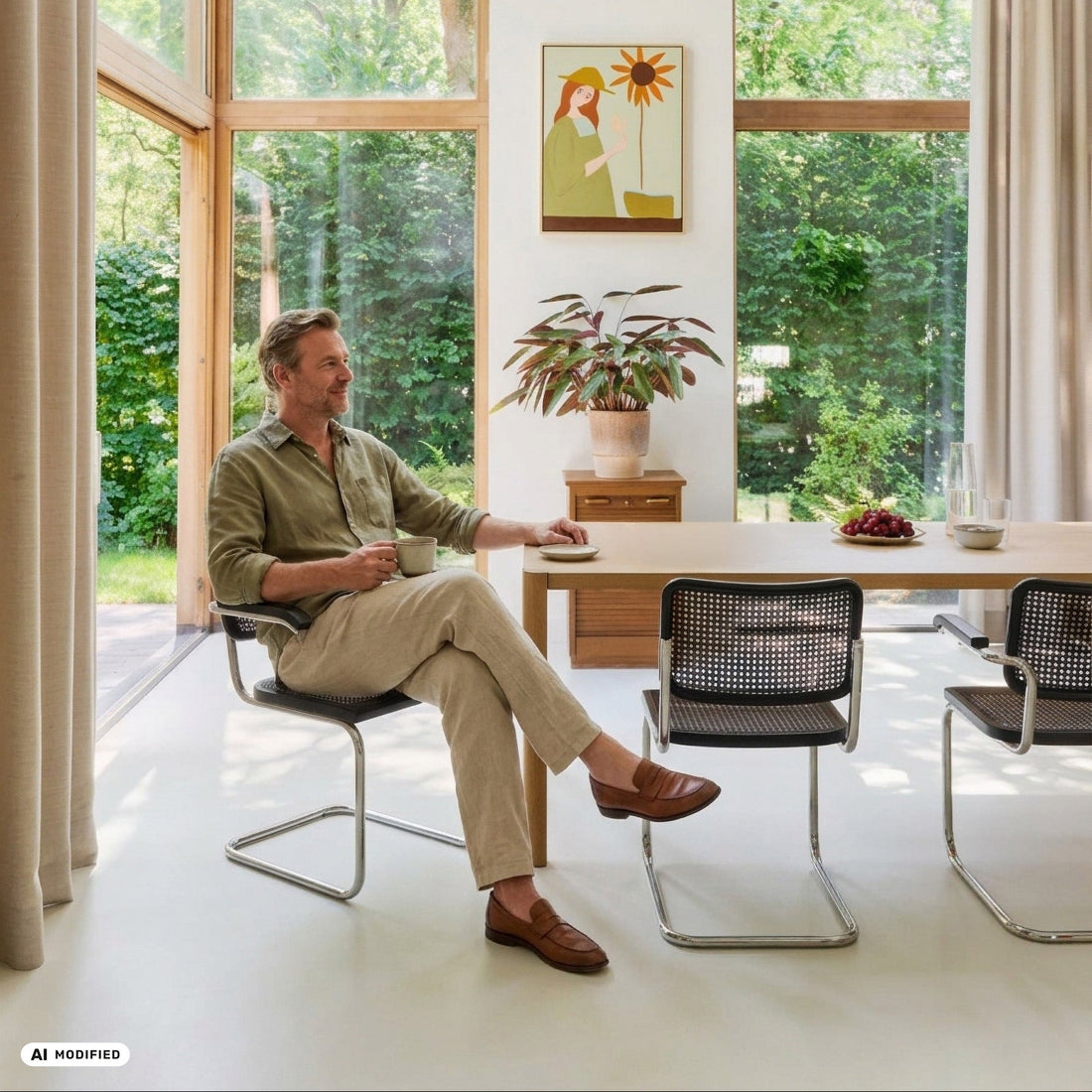
In 2026, the interiors world finally says goodbye to the minimalist "all beige" look. The new furniture trends, straight from IMM and from our experts' analyses, show a clear shift towards expressive shapes, tactile materials and a return to classic craftsmanship – always with an eye on the environment.
Furniture trends 2026 at a glance:
- Shapes: puffy shapes & sculptural design
- Materials: dark wood and high-gloss finishes
- Crafted authenticity: the new value of handmade
- Circular design: sustainability through recycled materials
- Textiles and patterns: "grandma style" and animal prints
- Colours for 2026: farewell to beige
1. Shapes: puffy shapes & sculptural design
In 2026, furniture becomes space-defining. Instead of purely functional pieces, voluminous, curvy silhouettes take over the living room.

Puffy shapes: The "marshmallow" look in upholstered furniture brings maximum comfort.
Sculptural and space-filling: Sofas and armchairs are getting larger and taking centre stage in the room as sculptural elements.

Tables and chairs are also softened with rounded corners and organic shapes. Umage, for example, gives its new designs a homely warmth and functional elegance with gentle lines.

2. Materials: dark wood and high-gloss finishes
Materials in 2026 are all about depth and texture. Dark woods and glossy surfaces in particular are setting new accents among the furniture trends for 2026.

Dark wood: There is a clear trend towards dark woods and striking veneers.
Wall panelling: Wood isn't just used for individual pieces of furniture – it's spreading across the whole room as wall panelling.
Piano lacquer: Ultra-glossy lacquered surfaces create an exciting contrast with matt natural materials.
Metals: Silver-coloured materials such as mirror-polished stainless steel or metals with a patina remain in focus.

3. Crafted authenticity: the new value of handmade
In 2026, furniture that tells a story and impresses with visible craftsmanship is becoming more important. The "crafted authenticity" trend shows above all in the return of traditional techniques and the use of materials with character.

The focus is on:
Visible textures: Wooden surfaces are often finished with coloured oil, so the natural grain can still be seen and felt.
Traditional details: Elements such as lace appliqués, fringing and elaborate tilework give furniture a sense of craftsmanship.
Vintage with character: Heirlooms and vintage objects with a natural patina are deliberately integrated into modern interiors to convey authenticity and permanence.
Artisan focus: High-quality veneers and the combination of wood with mirrored walls underline the desire for individually made one-offs instead of anonymous mass-produced goods.

This focus on the genuine and the imperfect is the perfect counterpoint to the season's smooth, high-gloss surfaces and gives every room a warm, human touch.
4. Circular design: sustainability through recycled materials
A key aspect of the 2026 furniture trends is growing environmental awareness that goes far beyond the standard. While certified wood and local raw materials are now considered a basic requirement, manufacturers are increasingly focusing on the circular economy:
Second-life materials: Manufacturers are making greater use of recycled materials to minimise the environmental footprint of their design icons.
Longevity through quality: The trend towards "vintage pieces with patina" underlines the value of durable furniture that can last for generations.
Natural finishes: The increasing use of coloured oil finishes on wood grain shows a return to natural finishing processes that don't affect the recyclability of furniture at the end of its life cycle.

The French brand TipToe is one of the brands that carry the idea of sustainability through the entire manufacturing process: its timeless designs are made to last, while 100% European suppliers guarantee quality materials. To make its furniture, TipToe uses only sturdy steel, recyclable aluminium, wood from PEFC-certified forests, wood from demolished buildings and recycled plastic. The pieces are assembled in French workshops and arrive flat-packed.
This focus on "eco-authenticity" ensures that modern design is not only attractive but also future-proof and responsible.
Discover many more sustainable products on our "Circular Design" theme page.
5. Textiles and patterns: "grandma style" and animal prints
In upholstery fabrics, we're seeing a return to playful, classic patterns.

Floral & bold: Sofas with floral prints define the new "grandma style".
Animal patterns: Zebra print is the animal pattern to watch in 2026.

Geometry: Harlequin patterns and classic art prints are finding their way onto upholstered furniture and textiles.
"For 2026, we're seeing a bold move away from restraint. Interiors are becoming more personal and expressive again. What's particularly exciting is the combination of nostalgic 'grandma style' and ultra-modern sculptural shapes. Furniture is no longer just something you furnish with – it's a real character in the room. It has never been easier to express your personality through the way you furnish your home." – Kirsten Rohrkamp, category manager
6. Colours for 2026: farewell to beige
In 2026, the colour palette becomes richer and more contrasting. Beige takes a back seat, while harmonious yet strong tones dominate.
Trend combination: Light blue paired with dark brown is one of the key colour schemes.
Deep colours: Burgundy, dark plum and chocolate brown are used for monochrome looks or as "colour all over" – even on ceilings.

What it means for your home
2026 is all about the interplay between nostalgia and modern comfort. Go for large, soft shapes and don't be afraid of dark woods and strong colours to give your home a contemporary yet cosy atmosphere. The odd vintage piece and personal mementoes are welcome to stay – they keep your home feeling like yours.
FAQ: furniture trends 2026 – everything you need to know
What are the dominant interior trends for 2026?
2026 is all about expressiveness and nostalgia. The key themes include:
- Modern Middle Ages & Italian classics: a return to historical and classic design elements.
- Grandma style: a cosy look with floral prints and nostalgic charm.
- Wellbeing design: furniture and lighting concepts that specifically support health and the human biorhythm.
Which colours are replacing classic beige?
Beige takes a back seat in 2026. Instead, rich, harmonious colour combinations dominate:
- Key combination: light blue paired with dark brown.
- Dark tones: chocolate brown (often in a monochrome look), burgundy and dark plum.
- Bold ceilings: colours are used generously – not just on walls, but increasingly on ceilings too.
Which shapes are in focus for upholstered furniture?
In 2026, furniture is becoming more sculptural and voluminous:
- Puffy shapes & marshmallow look: sofas and armchairs feature extremely soft, curvy, space-filling silhouettes.
- Sculptural presence: pieces of furniture act as objects in their own right that structure the room.
Which materials and finishes are on trend in 2026?
Materials play on strong contrasts between natural and high-gloss:
- Dark woods: veneered wood in particular, or surfaces with visible, colour-oiled grain, are on trend.
- Ultra-glossy: high-gloss lacquered surfaces (such as piano lacquer) meet metals with a patina or mirror-polished stainless steel.
- Details: embellishments such as fringing, lace or gemstone decorations applied directly to the product add a refined touch.
Which patterns are on trend in 2026?
Patterns are being used more boldly and graphically:
- Animal prints: zebra print is a particular focus.
- Geometry & art: harlequin patterns and classic art prints appear as bold statements directly on upholstered furniture.