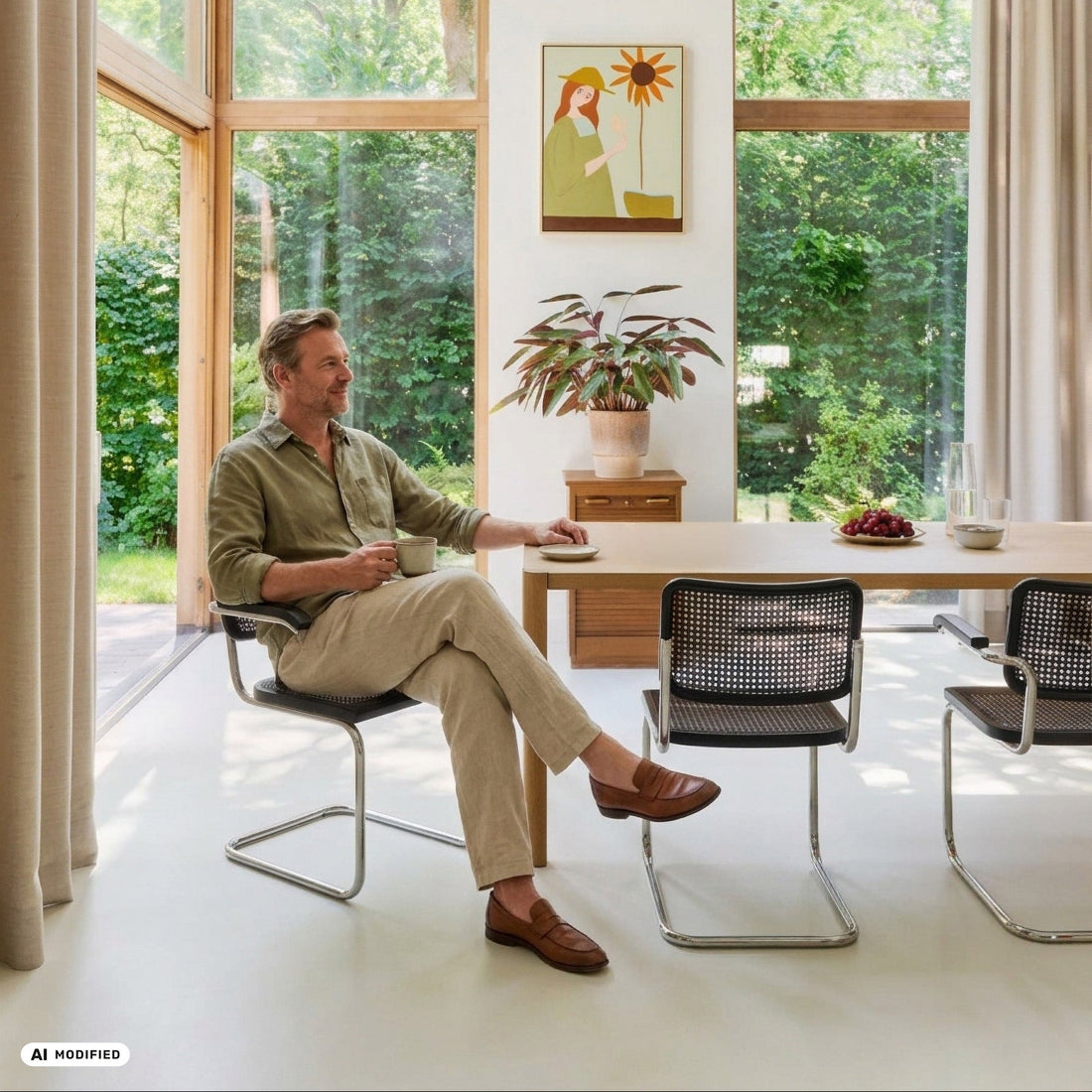
Bauhaus Design
The design revolution began more than 100 years ago in Thuringia. In 1919, Walter Gropius founded the most important and influential design school of the 20th century in Weimar in Germany: the "Staatliches Bauhaus".
The design revolution began more than 100 years ago in Thuringia. In 1919, Walter Gropius founded the most important and influential design school of the 20th century in Weimar in Germany: the "Staatliches Bauhaus".
551 products
Filter


Related categories
The development of Bauhaus design
Although the Bauhaus existed for only fourteen years, it remains one of the most influential movements in design history. Its combination of art, architecture and craft produced numerous designs that have had a lasting impact on modern design.
The Bauhaus was more than a design school – it was an attitude. Artists, architects and designers experimented with new materials, forms and production methods, and developed a new idea of how design and everyday life could be connected.
Figures such as Walter Gropius, Josef Albers, László Moholy-Nagy and Ludwig Mies van der Rohe played a decisive role in its development. After emigrating to the USA, they went on to influence architecture, product design and visual communication there, spreading the ideas of the Bauhaus around the world.

100 years of Bauhaus – free white paper
Fascinating facts, background knowledge and exclusive insights into the world of the Bauhaus.
A design style for everyone
The Bauhaus aim of making high-quality design accessible to many people is still central today. Many pieces of furniture, lights and accessories that now seem a matter of course can be traced back to this pioneering design movement.
With their clear design language, functional form and timeless aesthetic, Bauhaus designs still look modern and relevant decades after they were created. It is precisely this combination of function, quality and longevity that keeps the Bauhaus an important part of design history today.